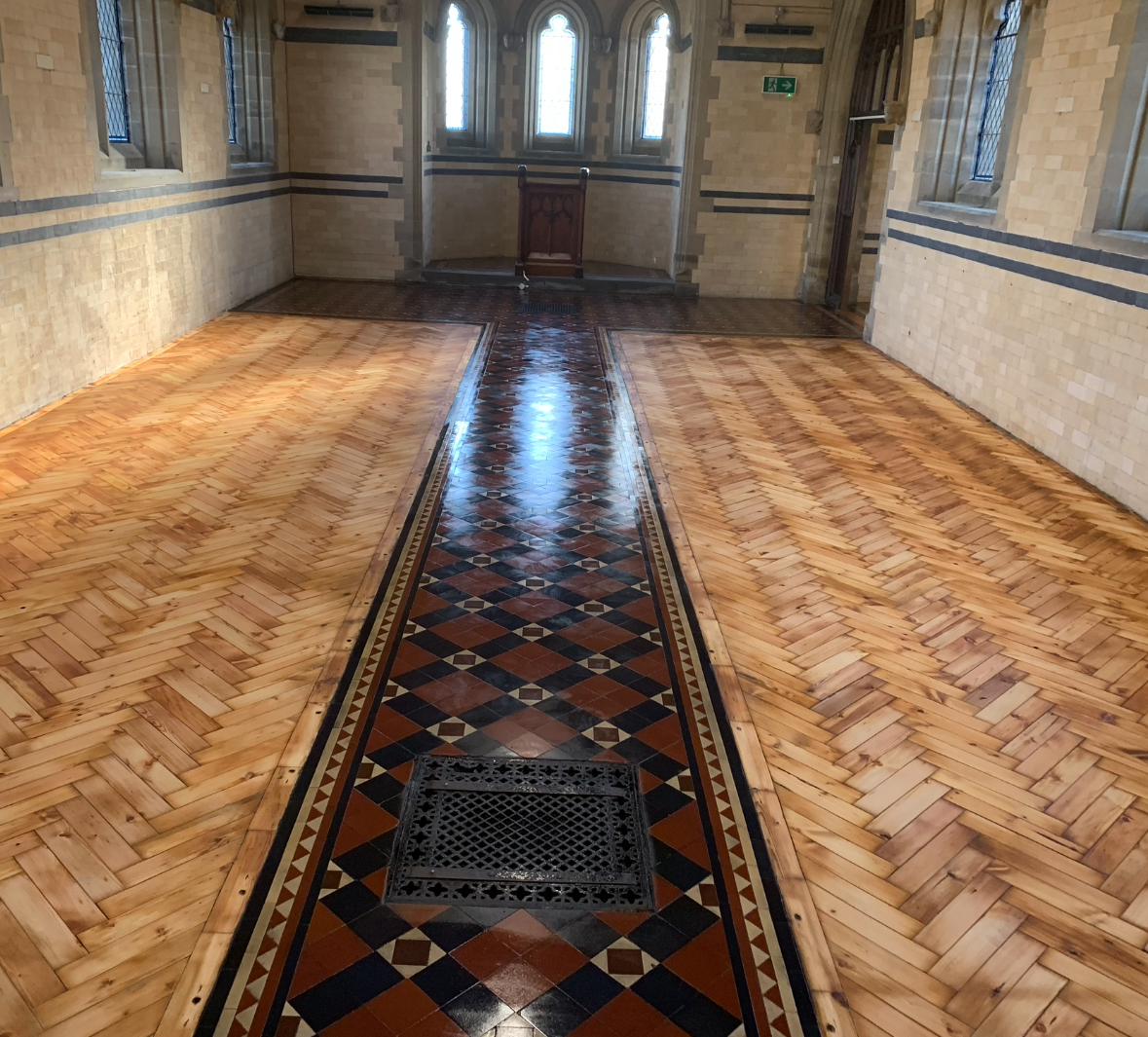
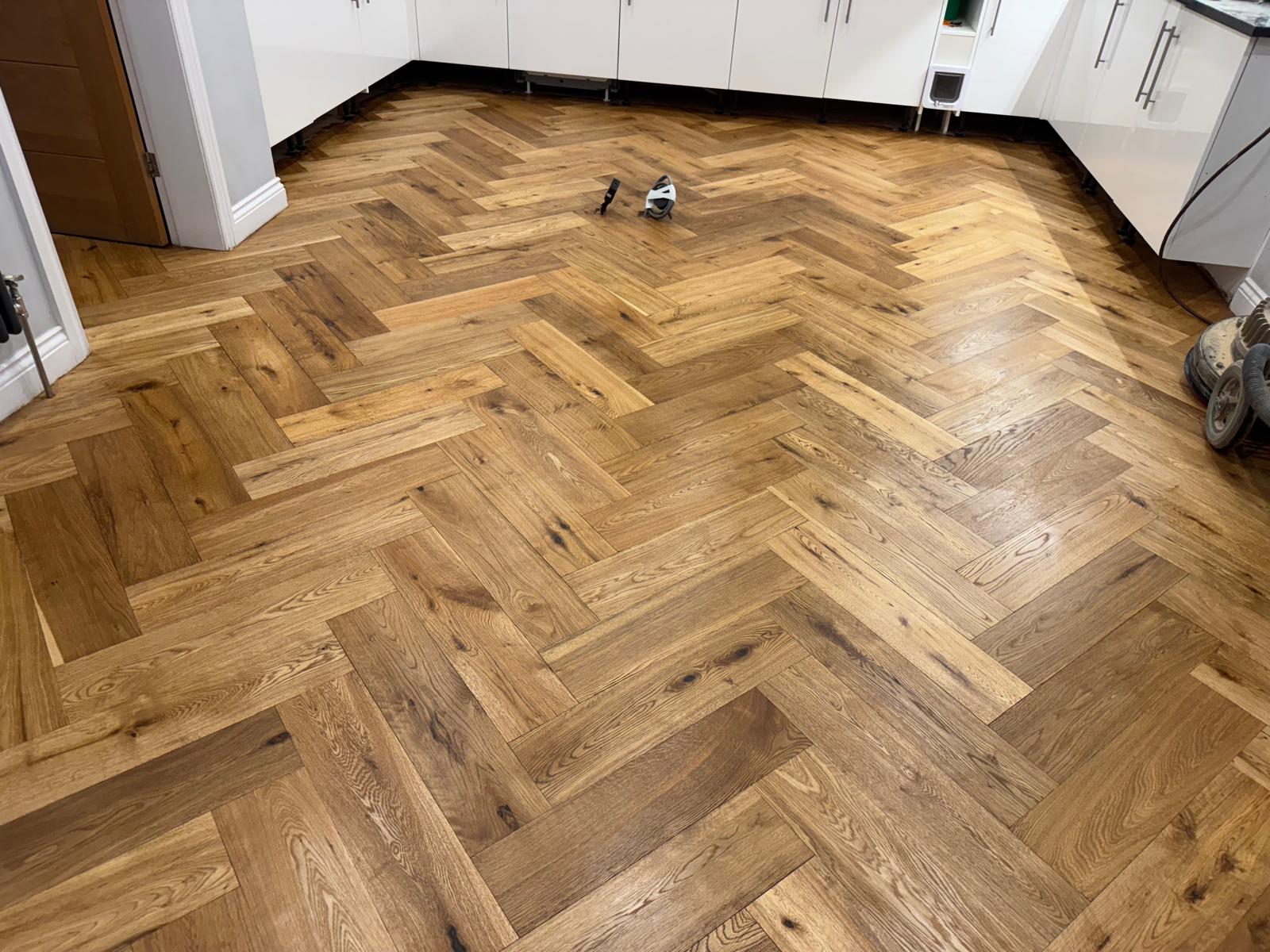
Engineered wood flooring is a popular choice in homes across Yorkshire. It offers the natural appearance of real timber while providing greater dimensional stability than traditional solid wood flooring. However, after years of everyday use, even a well-maintained engineered wooden floor can begin to show scratches, scuffs, worn finishes and other signs of wear.
One of the most common questions homeowners ask is whether engineered wood flooring can be sanded and restored in the same way as solid hardwood.
The answer is yes, many engineered wood floors can be sanded, but not all of them. Whether sanding is possible depends largely on the thickness of the real wood surface layer, the condition of the flooring and whether it has previously been sanded.
Understanding these factors is important because sanding an unsuitable engineered floor can permanently damage it.
What Is Engineered Wood Flooring?
Engineered wood flooring is manufactured using several layers of material bonded together to create a stable floorboard.
Unlike solid hardwood flooring, which consists of a single piece of timber, engineered flooring typically features a genuine hardwood surface attached to a layered plywood, softwood or high-density fibreboard core.
The upper hardwood layer provides the natural grain, colour and character associated with traditional wooden flooring. Common timber species include oak, walnut, ash and maple.
The construction underneath helps reduce the movement caused by changes in temperature and humidity.
This makes engineered wood flooring particularly suitable for modern properties, extensions and homes with compatible underfloor heating systems.
However, the layered construction also determines how the floor can be restored.
Can You Sand Engineered Wood Flooring?
Yes, engineered wood flooring can often be sanded, provided the real hardwood surface is thick enough.
Professional floor sanding removes a small amount of timber from the surface, taking away worn finishes, shallow scratches, stains and minor imperfections.
With solid wood flooring, there is generally more timber available for repeated sanding, although the depth of the tongue-and-groove construction still limits how much can safely be removed.
Engineered flooring is different because only the top layer consists of the decorative hardwood.
If sanding removes too much of this layer, the underlying core can become exposed, permanently damaging the board.
This is why the thickness of the hardwood wear layer is the most important consideration before sanding engineered wood flooring.
How Thick Does Engineered Wood Flooring Need to Be for Sanding?
Engineered flooring is available with different hardwood wear-layer thicknesses.
Some products have a very thin decorative veneer, while premium engineered boards may have a substantially thicker layer of real wood.
The following table provides a general guide.
|
Hardwood wear layer |
Sanding suitability |
|---|---|
|
Less than 2mm |
Generally unsuitable for conventional sanding |
|
2–3mm |
Limited potential; professional assessment essential |
|
3–4mm |
May support careful sanding, depending on condition |
|
4–6mm |
Often suitable for professional sanding and refinishing |
|
More than 6mm |
May offer greater restoration potential, subject to construction and condition |
These are guidelines rather than guarantees. The thickness of the remaining wear layer, previous sanding, board construction and the depth of any damage all influence what is possible.
For example, a floor originally manufactured with a 4mm hardwood layer may have significantly less material remaining if it has already been sanded.
A professional assessment should establish whether sufficient timber remains for safe restoration.
How Many Times Can Engineered Wood Flooring Be Sanded?
There is no fixed number of times that engineered wood flooring can be sanded.
The answer depends on several factors, including the original wear-layer thickness, the amount of timber removed during previous sanding and the condition of the boards.
A high-quality engineered oak floor with a thick hardwood surface may withstand more than one careful restoration during its lifetime.
By contrast, an engineered floor with a thin veneer might not be suitable for full sanding even once.
The sanding method also matters. Professional equipment, suitable abrasives and careful control are particularly important when working with engineered flooring.
Removing more timber than necessary reduces the floor’s remaining lifespan.
For this reason, an experienced floor sanding specialist will aim to preserve as much of the original hardwood surface as possible.
What Are the Signs That Engineered Wood Flooring Needs Restoring?
Not every tired-looking engineered wooden floor needs sanding.
Sometimes the existing finish simply requires specialist cleaning or maintenance.
However, there are several signs that professional restoration may be worth considering.
Scratches and surface damage
Furniture movement, pet claws, footwear and everyday foot traffic can gradually leave scratches across the floor.
Light scratches may affect only the protective coating, while deeper marks can penetrate the timber itself.
The appropriate treatment depends on how far the damage extends into the wood.
Dull or worn finishes
Over time, lacquered, oiled and other protective finishes can lose their original appearance.
Busy areas such as hallways, kitchens and living rooms may become noticeably dull compared with less frequently used sections.
Where the finish is worn but the underlying timber remains sound, refinishing may restore the appearance without requiring extensive sanding.
Discolouration and uneven colour
Sunlight, rugs, furniture and normal ageing can create variations in colour across engineered wooden floors.
Some discolouration can be reduced during sanding and refinishing, although deep staining and natural colour changes cannot always be removed completely.
Water stains and moisture damage
Water can cause staining, swelling, distortion and deterioration of engineered flooring.
Minor surface marks may be treatable, but boards affected by significant moisture damage can require replacement.
It is important to identify and resolve the source of moisture before attempting restoration.
A rough or uneven surface
A worn protective finish can leave areas of exposed timber feeling rough underfoot.
Depending on the floor’s condition, careful sanding and refinishing may help restore a smoother, more consistent surface.
However, loose boards, excessive movement or uneven subfloors need investigating before sanding begins.
For further advice, see our guide to 5 Signs Your Wooden Floor Needs Sanding.
Can Engineered Wood Flooring Be Refinished Without Sanding?
In some circumstances, yes.
If the hardwood surface remains in good condition and the damage is limited to the protective finish, it may be possible to improve the appearance without undertaking a complete sanding process.
The available options depend on the type of finish already applied.
Professional cleaning
Specialist cleaning can remove accumulated dirt, residues and contaminants that ordinary household cleaning methods may leave behind.
This can improve the appearance of a wooden floor without removing timber.
However, cleaning cannot eliminate deep scratches, worn-through coatings or physical damage to the boards.
Maintenance treatments for oiled floors
Some engineered wood floors are protected with penetrating oils or hardwax oils.
Depending on the product and condition, these floors may benefit from compatible maintenance treatments or localised re-oiling.
It is important to use products suitable for the existing finish.
Light abrasion and recoating
Certain lacquered engineered floors may be suitable for light surface abrasion followed by the application of a compatible protective coating.
This process is sometimes called screening and recoating.
Unlike full sanding, it is designed primarily to prepare the existing finish for a new coating rather than remove a significant amount of timber.
However, it is not appropriate for every floor, particularly where coatings are failing, contaminated or incompatible.
The best restoration method is the one that achieves the desired result while removing the least amount of original material.
How Is Engineered Wood Flooring Professionally Sanded?
When an engineered floor is suitable for sanding, the restoration process generally involves several stages.
1. Inspecting the flooring
The first step is to establish the type and condition of the floor.
This includes assessing the wear-layer thickness, identifying previous sanding, checking for loose boards and examining any water damage or structural problems.
Where possible, the original flooring specification can help establish the manufacturer’s recommendations.
2. Preparing the floor
Furniture and other obstructions are removed, and the floor is checked for anything that could interfere with sanding.
Loose or damaged boards may need attention before restoration begins.
3. Carefully sanding the surface
Professional sanding equipment is used to remove the existing finish and, where necessary, a controlled amount of the hardwood surface.
The abrasive grades and sanding technique are selected according to the flooring’s construction and condition.
The objective is to produce a consistent surface without unnecessarily reducing the remaining wear layer.
4. Addressing minor imperfections
Suitable repairs may be carried out where practical, including treating small gaps or imperfections.
Not every defect can be corrected through sanding, particularly where damage extends through the hardwood layer.
5. Applying a protective finish
Once the surface has been prepared, an appropriate finish can be applied.
Options may include compatible floor lacquers, oils and hardwax oils, depending on the timber, flooring construction and desired appearance.
The finish helps protect the restored floor against everyday wear.
For more information about the wider restoration process, visit our domestic wood floor sanding service.
Is Dust-Free Sanding Suitable for Engineered Wood Flooring?
Modern professional sanding equipment often incorporates powerful dust-extraction systems.
These systems capture much of the airborne dust produced during sanding, helping keep the working environment cleaner.
This can be particularly beneficial in occupied homes where homeowners want to minimise disruption.
However, dust extraction does not change whether an engineered floor is suitable for sanding.
A floor with an insufficient hardwood wear layer remains unsuitable regardless of the equipment used.
It is also important to recognise that no sanding process can guarantee the complete elimination of dust.
Our article, What Is Dust-Free Floor Sanding and Does It Really Work?, explains the process in more detail.
Engineered Wood Flooring vs Solid Wood Flooring: Which Is Easier to Restore?
Both engineered and solid wood flooring can offer excellent long-term performance, but their restoration potential differs.
|
Feature |
Engineered wood flooring |
Solid wood flooring |
|---|---|---|
|
Construction |
Hardwood surface bonded to a layered core |
Solid timber throughout |
|
Sanding potential |
Depends on hardwood wear-layer thickness |
Generally allows more sanding, subject to board construction |
|
Stability |
Designed to reduce dimensional movement |
More responsive to moisture and humidity |
|
Refinishing |
Often possible with suitable products and techniques |
Usually suitable if sufficient timber remains |
|
Restoration limitations |
Thin wear layers and exposed cores |
Board thickness, fixings and tongue-and-groove depth |
Neither type of flooring is automatically better for every home.
Engineered flooring can offer excellent stability and a genuine hardwood appearance, while solid timber often provides greater potential for repeated restoration.
The key is understanding the construction of the floor before choosing a treatment.
When Should Engineered Wood Flooring Be Replaced Rather Than Sanded?
Although restoration is often worth exploring, there are circumstances where replacing individual boards or the entire floor may be more appropriate.
These include floors with extremely thin hardwood veneers, extensive water damage, significant delamination, widespread structural deterioration or previous sanding that has left insufficient timber for further restoration.
Delamination occurs when the bonded layers begin to separate, potentially causing lifting, movement or visible deterioration.
Sanding cannot correct a failing bond between the layers.
Similarly, where the decorative hardwood has worn through to expose the underlying core, refinishing cannot recreate the missing timber.
In some cases, replacing damaged boards while retaining the surrounding flooring may offer a practical solution.
The decision should be based on the condition of the existing floor rather than appearance alone.
For homeowners considering their options, our guide to floor sanding versus replacing wooden floors explores the wider considerations.
Is It Worth Restoring Engineered Wood Flooring?
If the floor has a suitable hardwood wear layer and remains structurally sound, professional restoration can be an effective way to extend its useful life.
There are several potential benefits.
-
Preserving existing materials: Restoring usable flooring avoids unnecessary replacement.
-
Improving appearance: Scratches, worn coatings and minor surface imperfections may be reduced.
-
Refreshing the finish: Homeowners may be able to choose a different sheen or compatible finish.
-
Reducing disruption: Restoration can avoid some of the work involved in removing and replacing an entire floor.
-
Extending service life: Appropriate maintenance and refinishing can help protect the remaining hardwood surface.
However, restoration is not automatically the right choice.
A careful inspection is essential to determine whether sanding is technically suitable and likely to deliver a worthwhile result.
Engineered Wood Floor Sanding and Restoration Across Yorkshire
Wood Floor Sanding Professionals provides professional wood floor sanding and restoration services for homeowners across Yorkshire.
Whether you have engineered oak flooring in a modern home, traditional hardwood boards in a period property or a wooden floor showing signs of everyday wear, understanding its construction and condition is the starting point for deciding how best to restore it.
We work across areas including Barnsley, Doncaster, Sheffield, Leeds, Wakefield, Bradford and Huddersfield, helping homeowners explore suitable ways to improve and preserve their existing wooden floors.
Where engineered flooring is suitable for sanding, a carefully planned restoration can help bring back its natural character. Where sanding is not advisable, other maintenance or repair options may be worth considering.
Frequently Asked Questions About Engineered Wood Floor Sanding
Can all engineered wood floors be sanded?
No. Some engineered floors have hardwood veneers that are too thin for conventional sanding. The remaining wear-layer thickness, previous restoration work and overall condition determine whether sanding is possible.
Can you sand engineered oak flooring?
Yes, many engineered oak floors can be sanded if the real oak surface is sufficiently thick. However, engineered oak flooring is available in different constructions, so the wear layer should be assessed before work begins.
Can you sand engineered wood flooring with a 3mm wear layer?
Possibly. A 3mm wear layer may allow careful sanding in some circumstances, but it offers limited tolerance for material removal. The remaining thickness, previous sanding and condition of the boards must be considered.
Can you change the colour of engineered wood flooring?
Sometimes. Where sanding is possible, removing the existing finish may allow a compatible stain or alternative protective finish to be applied. Results depend on the timber species, construction and existing treatments. Testing is advisable before treating the entire floor.
Can you repair scratches in engineered wood flooring without sanding?
Minor scratches affecting only the protective finish may respond to suitable maintenance or repair products. Deeper scratches that penetrate the hardwood can require more extensive work, and some damage may not be fully repairable.
How do I know whether my engineered floor has been sanded before?
Previous sanding is not always obvious. Original product specifications, installation records and inspection of accessible board edges may provide useful information. A flooring specialist can assess the likely remaining wear layer.
Is engineered wood floor sanding messy?
Professional sanding systems with integrated dust extraction can significantly reduce airborne dust, although they cannot eliminate it completely. The amount of disruption depends on the condition of the floor and the work required.
Get Advice About Restoring Your Engineered Wooden Floor
If your engineered wooden flooring is looking tired, scratched or worn, it is worth establishing whether restoration is possible before considering replacement.
You can also explore our Wood Floor Sanding services, view examples of completed projects in our Gallery, or contact us directly to discuss your flooring restoration project.
Call today on 07545 071 446.