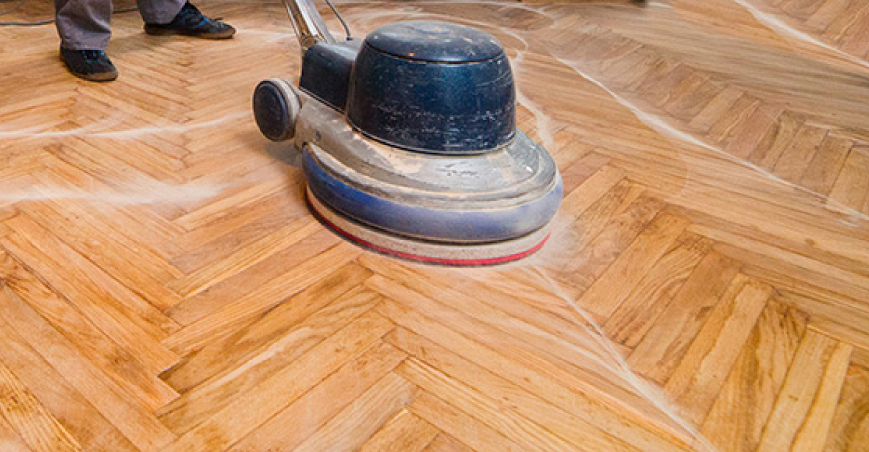
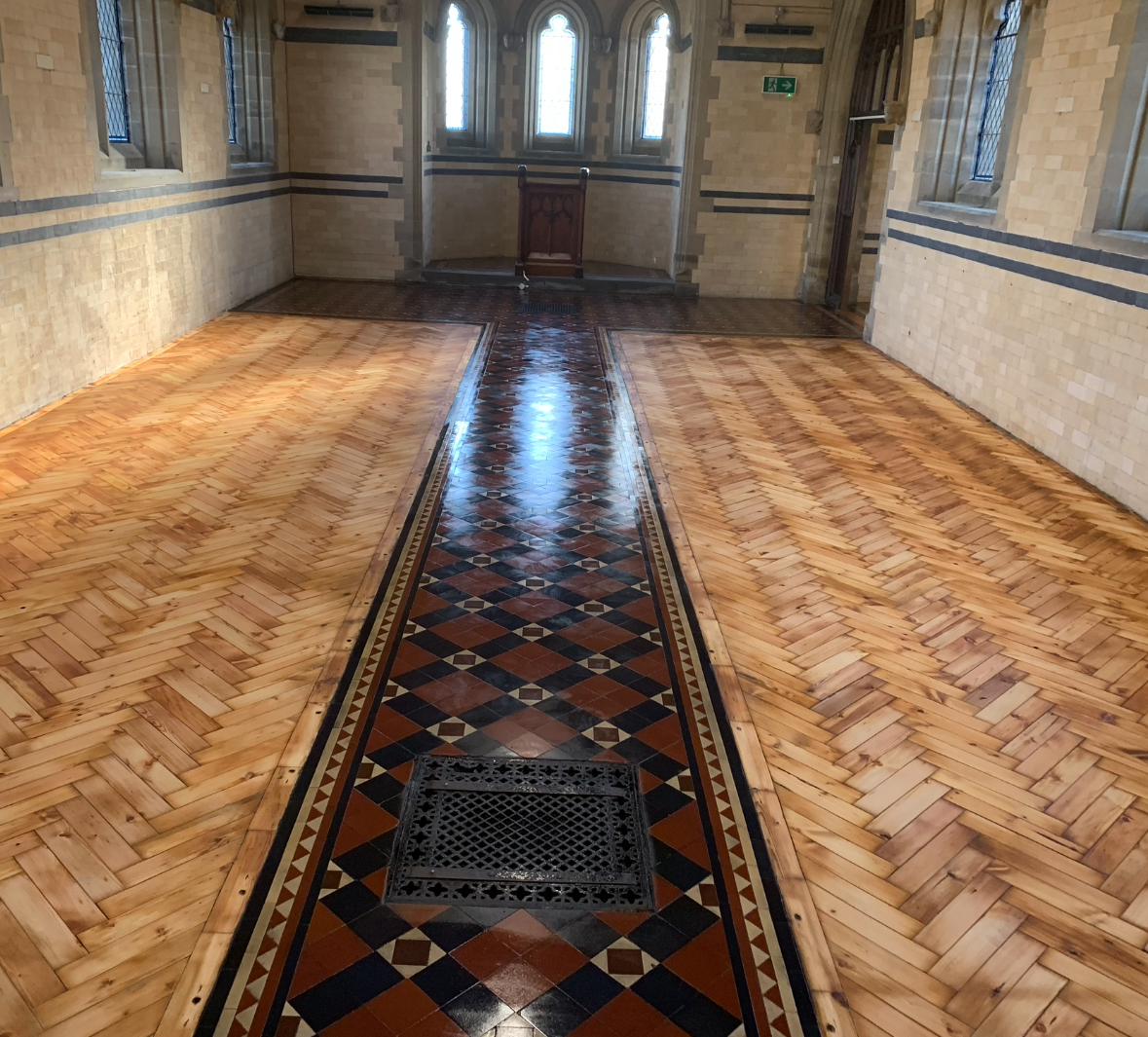
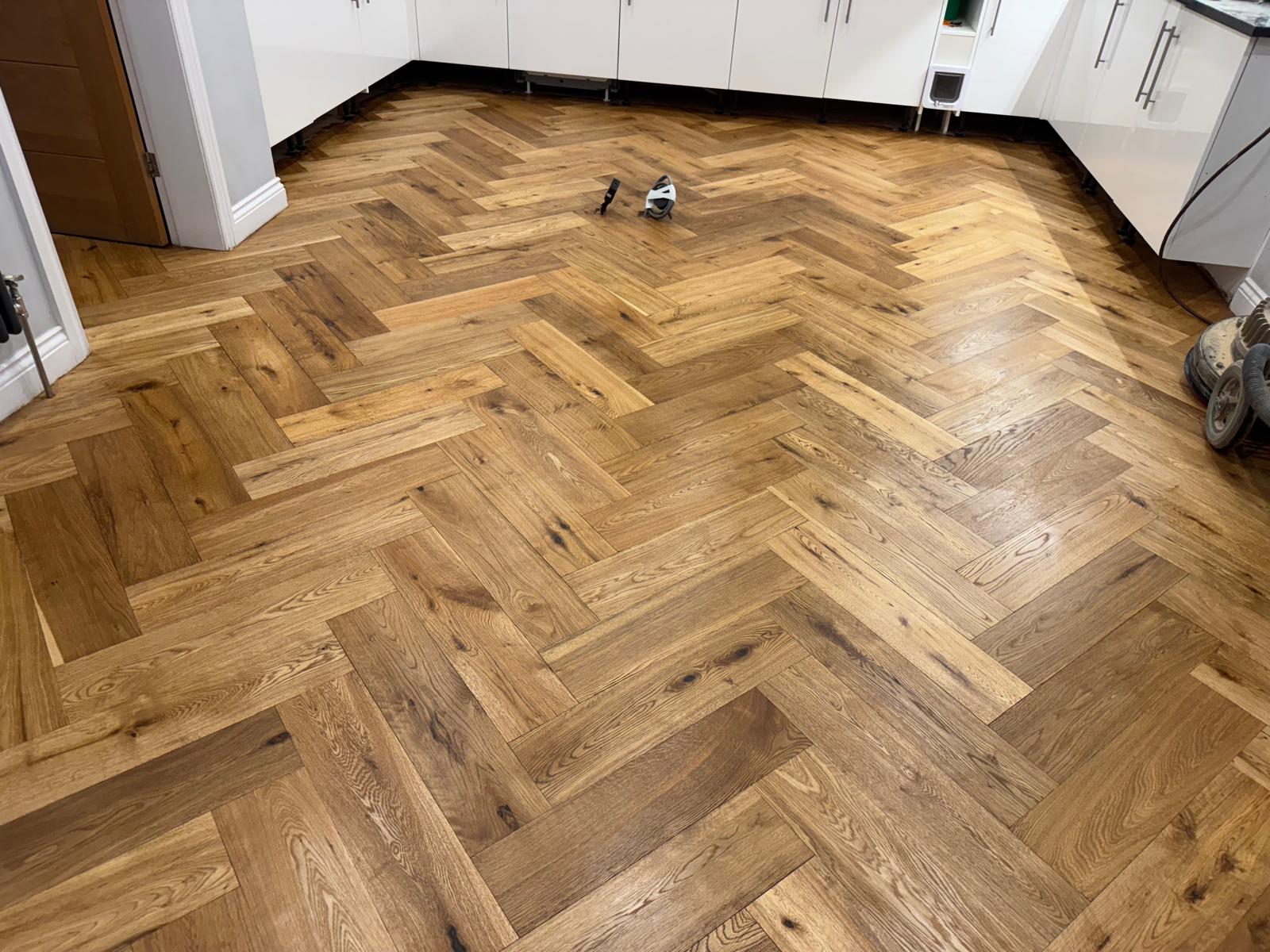
Parquet flooring is one of the most distinctive types of wooden flooring found in British homes. From traditional herringbone patterns in Victorian and Edwardian properties to more contemporary geometric designs, parquet brings character, warmth and craftsmanship to a room.
However, years of foot traffic, furniture movement, sunlight and everyday wear can leave parquet floors looking scratched, dull, uneven or damaged. In older properties, sections may also have become loose, stained or hidden beneath carpets and other floor coverings.
For homeowners discovering an original parquet floor or considering restoring one that has seen better days, an important question is whether it can be brought back to life.
The good news is that many parquet floors can be successfully restored through professional sanding, repairs and refinishing. Even floors that appear badly worn may have considerable restoration potential, provided the timber remains structurally sound.
The key is understanding the type of parquet flooring, its condition and the most appropriate restoration method.
What Is Parquet Flooring?
Parquet flooring consists of individual pieces of wood arranged in decorative patterns rather than conventional straight floorboards.
These pieces may be solid timber blocks, engineered wood elements or, in some modern products, thinner wood veneers attached to a supporting core.
Traditional parquet flooring was often made from hardwood species such as oak, beech, maple and mahogany. Other timber species may also be encountered, depending on the age and origin of the flooring.
The individual blocks are laid in repeating geometric arrangements, creating a distinctive appearance that differs from standard plank flooring.
Parquet became particularly popular in larger period properties, public buildings, schools and commercial premises, although it can also be found in more modest homes across Yorkshire.
Because many older parquet floors were constructed from substantial pieces of solid hardwood, they can sometimes offer excellent restoration potential.
However, the age of the floor alone does not guarantee that sanding will be suitable.
Can Old Parquet Flooring Be Restored?
Yes, many old parquet floors can be restored, even when they have suffered considerable surface wear.
Professional parquet floor restoration can involve several different processes, including:
-
Carefully sanding away worn coatings and superficial damage.
-
Repairing or replacing loose, broken or missing parquet blocks.
-
Removing suitable old adhesives and residues.
-
Filling minor gaps and imperfections where appropriate.
-
Applying new protective finishes to enhance and protect the timber.
The extent of the work depends on the floor’s construction and condition.
For example, a solid oak parquet floor with surface scratches and a worn lacquer may respond well to sanding and refinishing.
A floor with loose blocks, moisture damage or failing adhesive will generally require repairs before any sanding can begin.
In some cases, restoration may involve combining original timber with carefully matched replacement blocks.
A successful parquet restoration should preserve as much of the existing flooring as possible while ensuring the finished surface is stable, attractive and suitable for everyday use.
What Types of Parquet Flooring Can Be Restored?
Different parquet patterns and constructions can require different restoration techniques.
Herringbone Parquet Flooring
Herringbone is one of the most recognisable parquet flooring patterns.
Rectangular wooden blocks are laid at right angles to one another, creating a repeating zigzag arrangement.
Traditional herringbone parquet can often be sanded and refinished when the blocks are made from sufficiently thick solid timber.
However, the changing direction of the wood grain requires particular care during sanding to avoid visible scratches and uneven results.
Chevron Parquet Flooring
Chevron parquet resembles herringbone but uses blocks cut at an angle so that the ends meet to create continuous V-shaped lines.
The precise alignment of the blocks is an important part of the finished appearance.
Restoration needs to preserve this geometry while removing worn coatings and surface imperfections.
As with herringbone, sanding suitability depends on the thickness and condition of the timber.
Basket Weave Parquet Flooring
Basket weave parquet uses groups of wooden blocks arranged to create an interlocking woven effect.
The pattern may include blocks with grain running in several directions.
Professional sanding techniques need to account for these changing grain directions to achieve an even finish.
Mosaic Parquet Flooring
Mosaic parquet typically consists of smaller wooden pieces arranged in repeating patterns, sometimes supplied as tiles.
Older mosaic parquet floors can be suitable for restoration, although the size and thickness of the individual pieces may affect the work required.
Engineered Parquet Flooring
Modern parquet flooring is sometimes manufactured using an engineered construction, with a genuine hardwood surface bonded to a layered core.
These floors may be suitable for sanding if the hardwood wear layer is sufficiently thick.
However, thin veneers can make full sanding unsuitable.
For more information, see our guide to Can Engineered Wood Flooring Be Sanded? What Homeowners Need to Know.
What Are the Most Common Problems With Older Parquet Floors?
Parquet floors can develop several problems over time.
Some are primarily cosmetic, while others affect the stability of the flooring.
Scratches and Worn Finishes
Years of foot traffic can gradually wear away protective lacquer, oil or other finishes.
Scratches from furniture, footwear and general household use can leave the floor looking dull or uneven.
Where the timber remains sound, sanding and refinishing can often improve the appearance considerably.
Loose or Lifting Parquet Blocks
One of the most common issues with older parquet flooring is loose timber blocks.
This can happen when the original adhesive deteriorates, moisture affects the floor or movement occurs in the underlying substrate.
Loose blocks should be investigated and repaired before sanding.
Simply sanding over an unstable floor can damage the blocks and may worsen existing problems.
Missing or Damaged Wooden Blocks
Individual parquet pieces can become cracked, split or detached.
In some cases, replacement blocks can be sourced or manufactured to match the original flooring.
The closer the replacement timber matches the existing species, dimensions and grain, the more consistent the finished floor is likely to appear.
However, differences in age and colour may remain visible, particularly before the timber has had time to mature.
Gaps Between Parquet Blocks
Small gaps may develop because of timber movement, changes in humidity or deterioration of the original installation.
Some gaps can be treated during restoration, but filling every gap is not always appropriate.
Wood naturally expands and contracts, so rigid filling materials can fail if movement continues.
Water Stains and Moisture Damage
Water can cause dark staining, swelling, distortion and deterioration of parquet flooring.
Minor surface stains may respond to sanding, but deeper moisture damage can require more extensive repairs.
Where moisture has affected the adhesive or subfloor, the underlying problem must be resolved before restoration.
Old Adhesive and Bitumen Residues
Some older parquet floors were installed using black bitumen-based adhesives.
These materials can present particular challenges during restoration, especially if blocks have become loose or the floor has been lifted.
Older adhesives and floor materials may contain hazardous substances, including asbestos in some historical products.
Suspect adhesives should not be sanded, ground or disturbed until they have been appropriately assessed. Specialist testing or remediation may be required before work proceeds.
Can Parquet Flooring Be Sanded?
Yes, many solid wood parquet floors can be professionally sanded.
Sanding removes the existing protective coating and a controlled amount of timber from the surface.
This can help reduce scratches, shallow stains, worn finishes and minor variations between blocks.
However, parquet sanding requires particular care because the timber grain changes direction throughout the pattern.
Unlike conventional floorboards, where the grain generally runs in one direction, herringbone and other parquet designs contain numerous intersecting grain directions.
Using inappropriate sanding techniques can create visible scratches, uneven surfaces or damage to the blocks.
Professional restoration therefore involves selecting suitable sanding equipment, abrasives and techniques for the particular floor.
The amount of timber removed should also be kept to a minimum, particularly where the parquet has been sanded previously.
How Is Parquet Flooring Professionally Restored?
A typical parquet restoration project involves several stages.
1. Inspecting the Existing Parquet Floor
Before any work begins, the floor should be inspected to identify its construction, timber species, condition and any previous restoration work.
Particular attention is paid to loose blocks, moisture damage, missing sections and the condition of the underlying subfloor.
This assessment helps determine whether the floor can be safely sanded and what repairs may be necessary.
2. Repairing Loose or Damaged Blocks
Loose parquet blocks may need to be carefully lifted, cleaned and resecured using an adhesive suitable for the timber and substrate.
Damaged or missing pieces may be replaced where suitable matching materials are available.
Any underlying moisture or substrate problems should be addressed before repairs are completed.
3. Preparing the Surface
The floor is prepared for sanding by removing suitable surface obstructions and checking that blocks are secure.
Old coatings, residues and previous treatments may influence the preparation method.
Where potentially hazardous historic adhesives are present, appropriate assessment and precautions are essential.
4. Sanding the Parquet Flooring
Professional sanding equipment is used to remove the worn finish and prepare the timber surface.
The sanding sequence may involve different abrasive grades and changes in direction to account for the parquet pattern.
The aim is to achieve a smooth, consistent surface while preserving the original timber.
5. Filling Suitable Gaps and Imperfections
Minor gaps or imperfections may be treated using appropriate materials where the floor’s condition allows.
The suitability of filling depends on the size of the gaps, the timber and the amount of movement expected.
Not all gaps should be filled.
6. Applying a Protective Finish
Once the sanding and preparation are complete, a suitable protective finish can be applied.
The choice of finish influences the floor’s appearance, maintenance requirements and resistance to everyday wear.
What Is the Best Finish for Restored Parquet Flooring?
There is no single finish that is best for every parquet floor.
The most suitable option depends on the timber species, room usage, desired appearance and maintenance preferences.
Lacquered Parquet Flooring
Modern wood floor lacquers form a protective coating over the timber.
They are available in different sheen levels, including matt, satin and gloss.
A suitable lacquer can provide good resistance to everyday wear and is often chosen for busy domestic areas.
Oiled Parquet Flooring
Wood flooring oils can enhance the natural appearance and texture of the timber.
Depending on the product, oiled finishes may allow localised maintenance and repair.
However, they generally require appropriate ongoing care and maintenance products.
Hardwax Oil Finishes
Hardwax oils combine oils and waxes to create a protective finish that retains a relatively natural timber appearance.
Different products offer varying levels of durability, sheen and maintenance requirements.
Choosing Between Matt and Satin Finishes
Matt finishes can create a subtle, contemporary appearance that emphasises the natural character of the wood.
Satin finishes provide a gentle sheen that can highlight the parquet pattern and timber grain.
The final appearance also depends on the timber species and any stain or colour treatment used.
Testing a small area before applying the chosen finish throughout the room can help establish the likely result.
Can You Change the Colour of Parquet Flooring During Restoration?
In many cases, yes.
Where the parquet floor is suitable for sanding, removing the existing finish may create an opportunity to apply a compatible wood stain or colour treatment.
Some homeowners prefer to retain the natural colour of oak or other hardwoods, while others choose a darker or lighter appearance.
However, not every timber species responds to staining in the same way.
Differences in grain, timber age and previous treatments can also influence the finished colour.
Parquet patterns may contain blocks with different grain directions, which can affect how stain is absorbed and how the colour appears.
For this reason, sample testing is particularly important.
A professional restoration should aim to produce a consistent appearance without disguising the natural character of the timber.
Is Dust-Free Sanding Possible With Parquet Flooring?
Modern professional floor sanding equipment often incorporates powerful dust-extraction systems.
These systems capture much of the dust produced during sanding, helping reduce airborne particles and keeping the working environment cleaner.
Dust extraction can be particularly beneficial when restoring parquet flooring in occupied homes.
However, no sanding process can guarantee the complete elimination of dust.
The condition of the floor, the sanding equipment and the restoration techniques all influence the amount of dust produced.
For a more detailed explanation, read our guide to What Is Dust-Free Floor Sanding and Does It Really Work?.
Can Parquet Flooring Be Restored Without Sanding?
Sometimes, yes.
If the timber remains in good condition and the main problem is a dull or lightly worn protective finish, full sanding may not be necessary.
Alternative treatments can include specialist cleaning, compatible maintenance products or light surface preparation followed by recoating.
The suitability of these treatments depends on the existing finish and the condition of the timber.
For example, certain lacquered parquet floors may be suitable for screening and recoating, provided the original coating is sound and compatible with the new finish.
Some oiled floors may respond to appropriate cleaning and maintenance treatments.
However, these methods will not correct deep scratches, significant staining, loose blocks or structural damage.
A professional assessment can help determine whether sanding is necessary or whether a less intensive treatment would be appropriate.
Is It Better to Restore or Replace Old Parquet Flooring?
Many homeowners assume that badly worn parquet flooring needs to be replaced.
However, appearance alone is not always a reliable indication of its condition.
A floor with scratches, worn lacquer and minor surface damage may still contain substantial amounts of usable hardwood.
Restoring the existing parquet can offer several benefits.
-
Preserving original character: Traditional parquet patterns can be an important feature of period properties.
-
Retaining existing materials: Restoration avoids unnecessarily removing timber that remains suitable for use.
-
Maintaining established patterns: Original herringbone, basket weave and mosaic designs can be difficult to reproduce exactly.
-
Reducing waste: Repairing and refinishing existing flooring can reduce the need for replacement materials.
-
Extending the floor’s lifespan: Appropriate restoration and maintenance can help protect the timber for years to come.
However, replacement may be necessary where the flooring has suffered extensive moisture damage, widespread adhesive failure, severe distortion or deterioration beyond practical repair.
Thin engineered parquet veneers may also limit sanding options.
The decision should consider the floor’s condition, construction and long-term suitability.
Our guide to Floor Sanding vs Replacing Wooden Floors: Which Is Better for Your Home? explores this decision in more detail.
Restoring Original Parquet Flooring in Yorkshire Homes
Yorkshire has a varied housing stock, from Victorian and Edwardian properties to traditional stone houses, interwar homes and more modern developments.
Parquet flooring can be found in properties of different ages, particularly in entrance halls, reception rooms, dining rooms and larger living spaces.
In some older homes, original parquet has been concealed beneath carpets or other floor coverings for decades.
Removing these coverings can reveal attractive timber patterns, although the condition of the floor may vary considerably.
Some areas may have retained their original finish, while others may show signs of adhesive deterioration, moisture exposure or previous alterations.
Where the timber remains sound, careful restoration can preserve a distinctive feature of the property.
Wood Floor Sanding Professionals provides floor sanding and restoration services across Yorkshire, including:
-
Barnsley
-
Sheffield
-
Doncaster
-
Leeds
-
Wakefield
-
Bradford
-
Huddersfield
Whether the property contains traditional solid oak parquet or a more recent engineered herringbone floor, the first step is understanding its construction and condition.
For more information about restoring wooden floors in your home, visit our domestic wood floor sanding services.
Frequently Asked Questions About Parquet Floor Restoration
Can You Restore a Parquet Floor That Has Been Covered by Carpet?
Yes, many parquet floors that have been hidden beneath carpets can be restored. However, the condition of the timber, adhesive and subfloor should be assessed first. Carpet adhesives, moisture damage or missing blocks may require additional work.
Can Loose Parquet Blocks Be Repaired?
Often, yes. Loose blocks may be carefully lifted and resecured using suitable adhesives, provided the timber and underlying substrate remain sound. Widespread movement or adhesive failure may require more extensive repairs.
Can Herringbone Parquet Flooring Be Sanded?
Yes, many solid hardwood herringbone floors can be sanded. However, the changing grain direction requires appropriate equipment and sanding techniques to avoid visible scratches and uneven results.
How Many Times Can Parquet Flooring Be Sanded?
There is no fixed number. The answer depends on the thickness and construction of the timber, previous sanding and the amount of material that needs removing. Some traditional solid wood parquet floors offer considerable restoration potential, while thin engineered products may be more limited.
Can You Replace Individual Damaged Parquet Blocks?
In many cases, individual damaged or missing blocks can be replaced. Matching the original timber species, dimensions and pattern is important, although colour differences may remain visible.
Can Old Parquet Flooring Be Made Lighter?
Sometimes. Sanding may remove darkened finishes and some surface staining, allowing the natural timber colour to become more visible. However, the final result depends on the wood species, age, previous treatments and any colour changes within the timber itself.
Is Parquet Flooring Difficult to Maintain After Restoration?
Not necessarily. Regular cleaning, suitable maintenance products and protection against excessive moisture can help preserve the restored surface. The exact maintenance requirements depend on whether the floor has been finished with lacquer, oil or hardwax oil.
Is Restoring Parquet Flooring Environmentally Beneficial?
Restoring an existing usable floor can reduce the need for new flooring materials and avoid unnecessary disposal of timber. The overall environmental impact depends on the materials, products and processes involved, but retaining sound flooring is often worth considering before replacement.
Professional Parquet Floor Sanding and Restoration Across Yorkshire
A worn or damaged parquet floor does not necessarily need replacing.
With suitable repairs, careful sanding and an appropriate protective finish, many traditional parquet floors can be restored while preserving their original patterns and character.
Whether you have discovered old parquet beneath a carpet, are dealing with loose herringbone blocks or simply want to refresh a tired wooden floor, understanding the condition of the existing timber is essential.
Wood Floor Sanding Professionals provides professional wood floor sanding and restoration services throughout Yorkshire.
You can also explore our Wood Floor Sanding services, view examples of completed projects in our Gallery, or contact us directly to discuss your flooring restoration project.
Call today on 07545 071 446.